

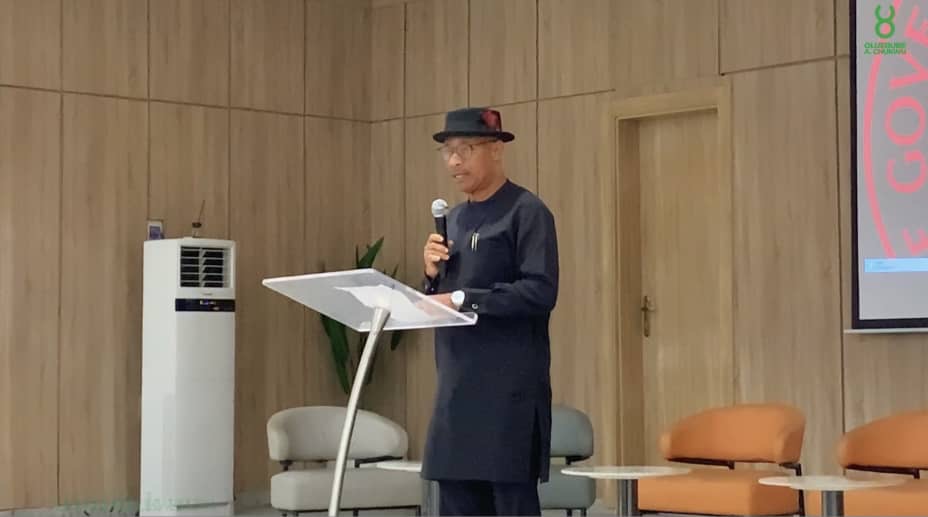
The Senior Special Assistant to the Governor of Abia state on Due Process, Dr. Oluebube A. Chukwu, has said that Abia State’s push for a unified digital governance framework will significantly enhance transparency, accountability and fiscal discipline across government institutions.
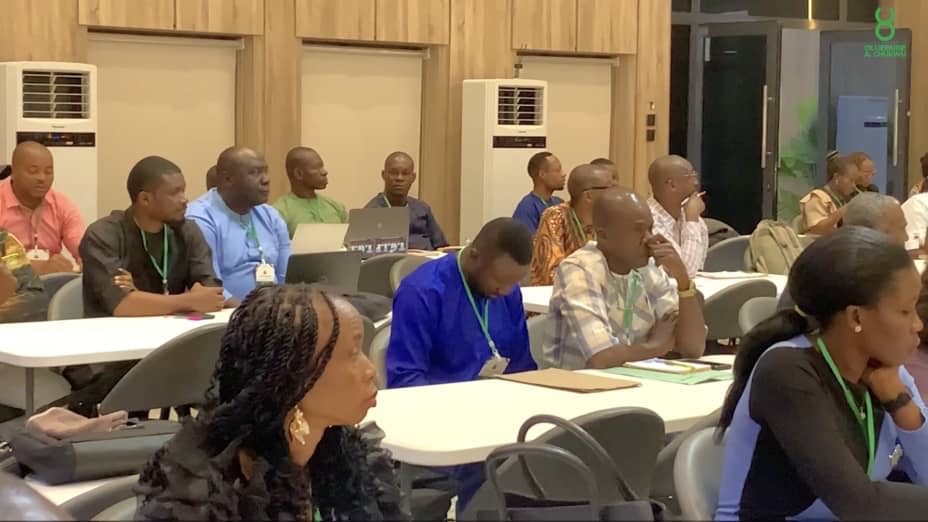
Dr. Chukwu made this known recently during the Future Enterprise and Data Architecture workshop themed; “One Citizen, One Identity: Unlocking Data-Driven Governance,” convened by the state Ministry of Budget and Planning.
According to him, building an interoperable system that allows Ministries, Departments and Agencies (MDAs) to share data seamlessly will eliminate duplication, reduce leakages and improve compliance with due process standards.
“A unified government data architecture will significantly reduce leakages, enhance monitoring of public expenditure and ensure that procurement processes are traceable and verifiable in real time. This is fundamental to institutional reform and good governance,” he said.
He stressed that breaking bureaucratic silos is critical to building a results-driven public sector capable of delivering timely, citizen-focused services, noting that technology must support transparency and efficiency in public procurement and financial management.

Declaring the workshop open on behalf of Governor Alex Chioma Otti, the Deputy Governor, Engr. Ikechukwu Emetu, said the initiative aligns with the administration’s commitment to deploying technology to improve service delivery, revenue management and evidence-based decision-making.
The workshop brought together policymakers, technocrats and development partners to design a framework that will enable coordinated digital governance and strengthen interoperability across MDAs.
Speaking during a panel session titled “Breaking Silos, Building One Government,” a representative of the Director-General of the National Information Technology Development Agency (NITDA), Kashifu Inuwa, emphasised that digital transformation succeeds only through collaboration and institutional synergy.
“One thing that is very clear is partnership and collaboration. If you want to take advantage of collective intelligence, then partnership is the key. If you want to succeed in building a unified government system, collaboration is the way to go,” he stated.
He further noted that beyond deploying systems, public institutions must embrace cultural change to achieve meaningful reform.
“Digital transformation is as much about people as it is about process and technology. If culture resists change, it can undermine strategy at every level. We must move from control to collaboration, and from isolation to integration,” he added.
Participants also highlighted NITDA’s national target of achieving 70 percent digital literacy through structured programmes across formal and informal sectors, as well as ongoing integration of digital education into school curricula and civil service capacity development initiatives.
Stakeholders agreed that sustained federal–state collaboration will be crucial to realising the vision of a connected government where systems communicate seamlessly, decisions are data-driven and citizens access efficient public services.
If consistently implemented, Abia’s enterprise architecture reform is expected to position the state as a leading example in Nigeria’s transition toward integrated, data-driven governance.
oluebubechukwu.com